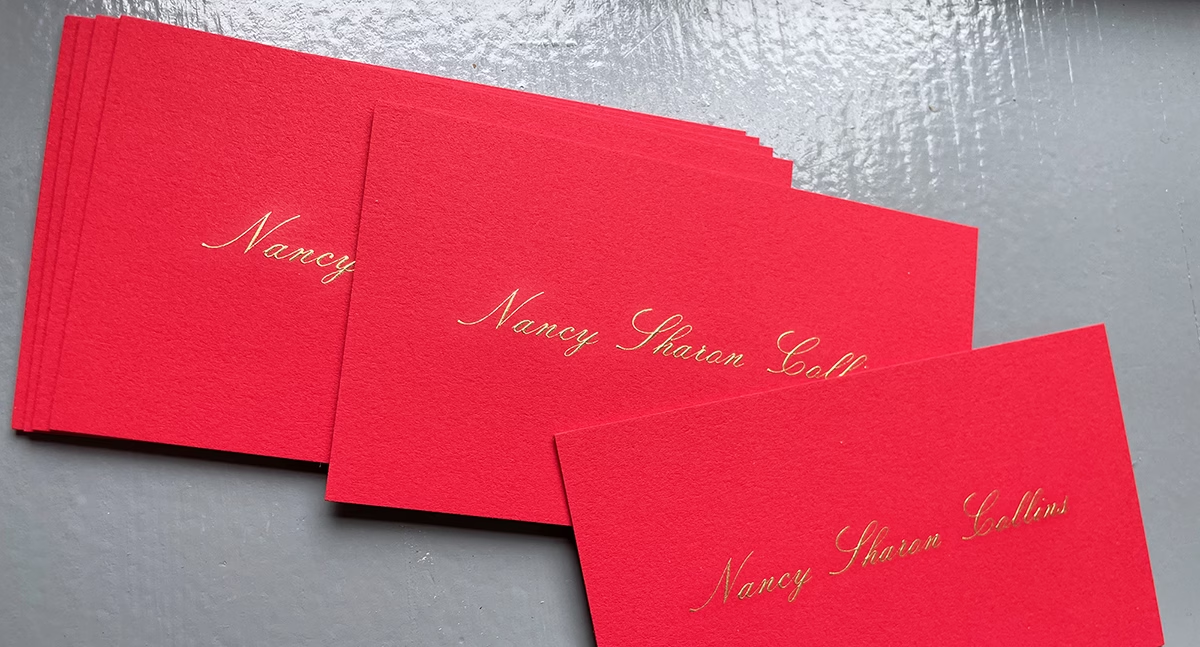
Do you remember those little paper cards that sociable people would exchange when meeting? Using them is still a lovely gesture. Far removed from digital and electronic media it is haptic, meaning it engages the sense of touch.
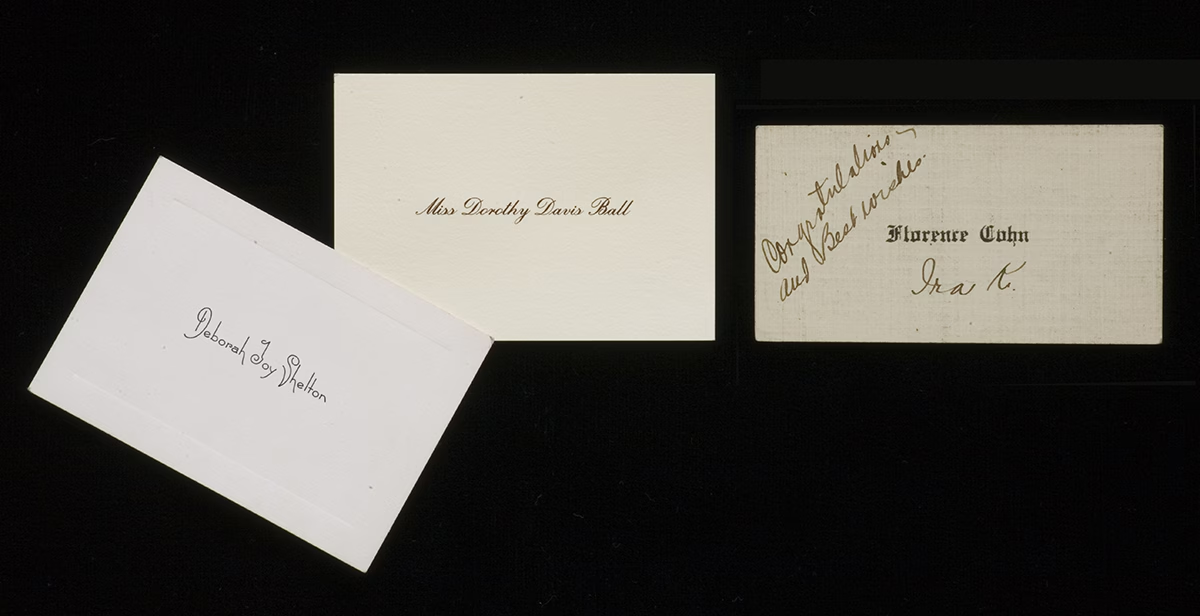
Similar to business cards but with only your name. Allowing plenty of space for handwriting personal notes such as phone, email, and other contact information. Calling cards are typically smaller than business cards. and their size is supposed to be in indication of marital status. Forms and uses for these little missives have evolved over time and, today, we pretty much specify sizes that suit our mood and, are usually no wider than 3″ and 2″ tall.
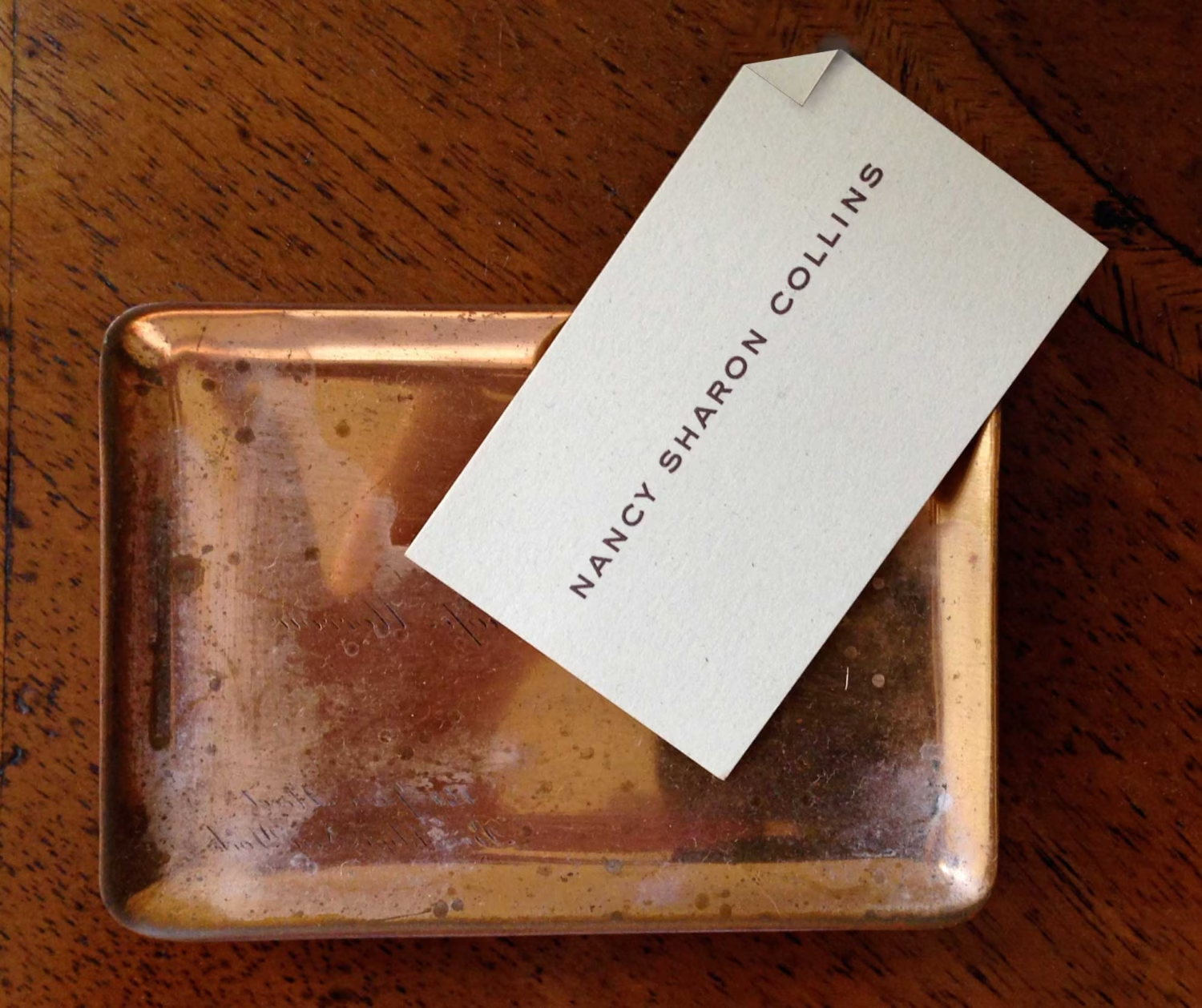
There’s a secret code from the Victorian era for folding-down corners. Each fold and its critical placement has meaning which could be snarkily handy today. Following is a list of updated shorthand for adding the coded-folded message to your calling card:
- Upper right-hand corner folded in: Someone wants to meet you
- Upper right-hand corner folded back: Have a nice day
- Lower right-hand corner folded in: I think I like you
- Lower right-hand corner folded back: What the…?
- Upper left-hand corner folded in: Congratulations
- Upper left-hand corner folded back: Sorry
- Lower left-hand corner folded in: Condolences
- Lower left-hand corner folded back: No response
Curious about the history and etiquette of calling cards? Watch this video from a 2014 typographic conference in which Mrs. Collins explains calling cards. It takes a while for Collins to warm-up but filled with kookie, calling card information, uses, literary references, and very funny, especially towards the end.
Interested in ordering your own, contemporary calling cards? Contact Mrs. Collins directly to discuss. She loves chatting about engraved stationery!