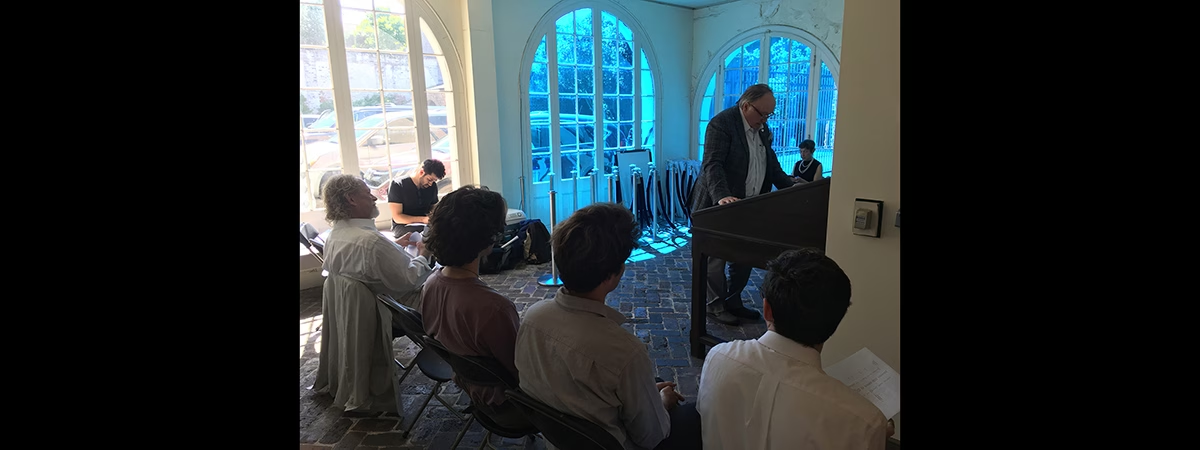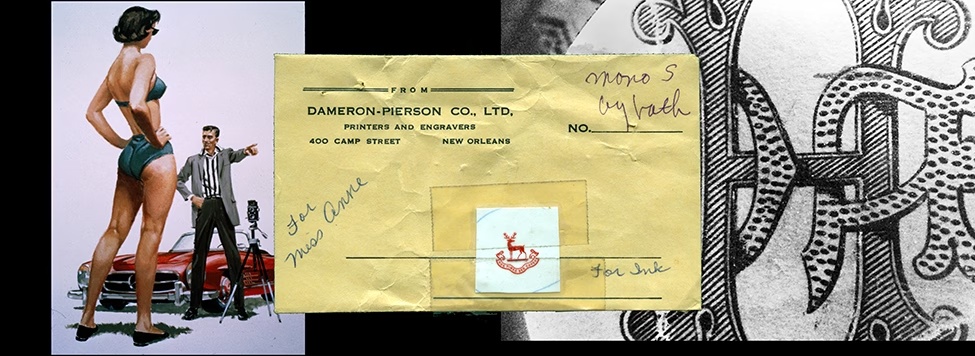
Mrs. Collins’s love for engraving, print, typography, and graphic design history is well documented. To nurture this passion, she amassed quite a library of research material on these subjects: vintage paper and engraving samples, engravers’ sketches, type catalogs and specimens, books, pamphlets, and more books about letter writing, intaglio, monograms, crests and seals, specimens of stationery engraved historically and now. Recently Collins has contributed much of the material to various archives and special collections in South Louisiana, where she spends the majority of her time.
Follow along in this article about these five collections, now fully accessioned and almost all fully cataloged. Which is a big deal in the archives world!
We begin the journey back in 2006, one year after Hurricane Katrina devastated much of South Louisiana, many local New Orleans commercial printers were literally flooded out of business. To some, the resulting detritus was just a bunch of metal. Expensive to haul to the dump. This added to the insult of having to go close.
To Mrs. Collins, the wet, rusting material was something more.
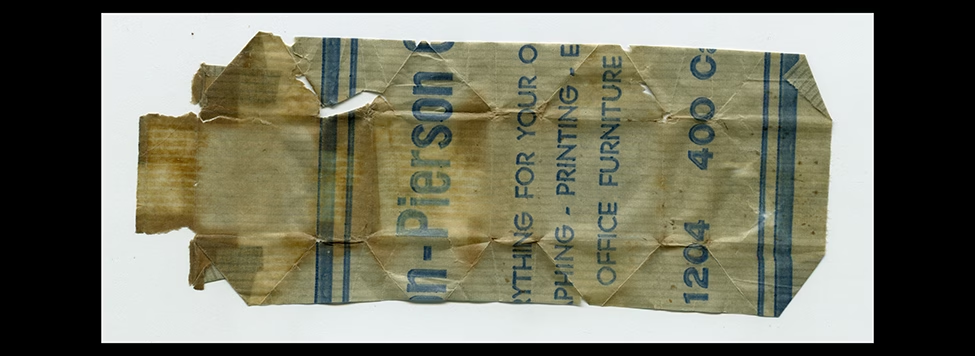
Working with Jim Joly, then owner of the Jim Joly printing company in New Orleans, Mrs. Collins helped salvage etched copper plates. From which Joly had engraved business cards and stationery for the Gulf South region. In their original metal file cabinet, these items were donated to the Southeastern Louisiana University Archives Collection. The Jim Joly Dameron-Pearson Collection of Commercial Engraving Plates comprises 199 commercial engraving plates. Joly had acquired them and the specialized engraving printing presses to utilize the arcane objects from Dameron-Pearson. Who, in yet another iteration of a firm supplying offices with stuff that is needed in offices, still exists. The equipment and plates had been sold off as considered non-money-making. Ironically, Joly was never able to make a lucrative asset from it, either.
A list of plates in the Southeastern collection can be found HERE.
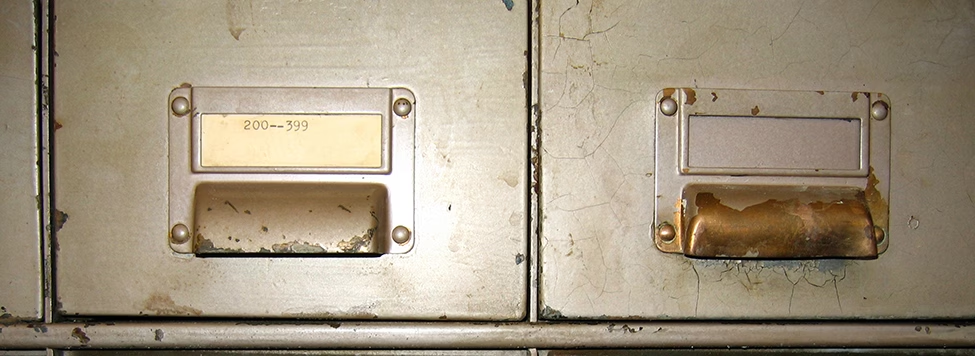
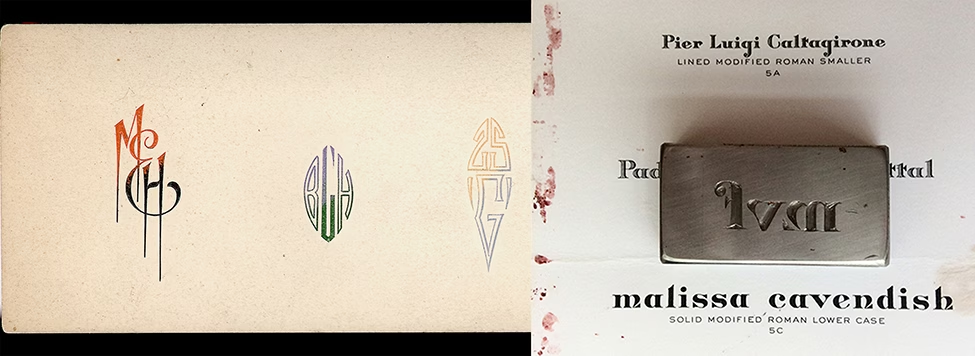
Two years later, Collins was called back to see if she would also adopt the much more interesting 1/2” hand engraved steel dies. Most were once used for cards and letter sheets, including crests and seals, and all sorts of family devices to be engraved on personal stationery. Mrs. Collins took these on, too. By purchasing and storing them for months in a chest freezer, then laid them out on three 8’ long folding tables in the open air on a sunny day with a light breeze. The wisdom being that freezing, then exposure to sunlight, followed by softly brushing off any black bits that might be mold…the process stabilized them to avert mold from growing. Then the collection, again in its original steel cabinet, was transferred to the Louisiana State University Libraries Special Collections. Contents and descriptions of this collection are available HERE.
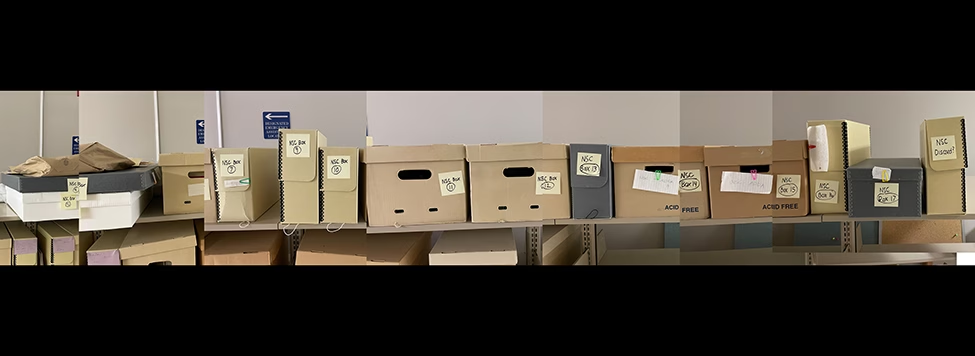
From Collins’s beginnings in her own graphic design studio in New York City, she collected research and reference examples such as design projects, typography, printed material, advertising and promotional materials, and ephemera. The result is the 16.36 linear feet of the Nancy Sharon Collins Design Collection at the Loyola University New Orleans Special Collections and Archives. The collection and descriptions can be found HERE.
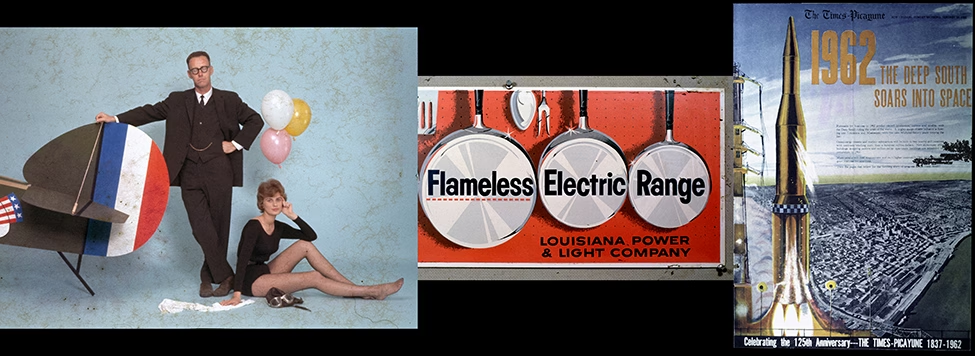
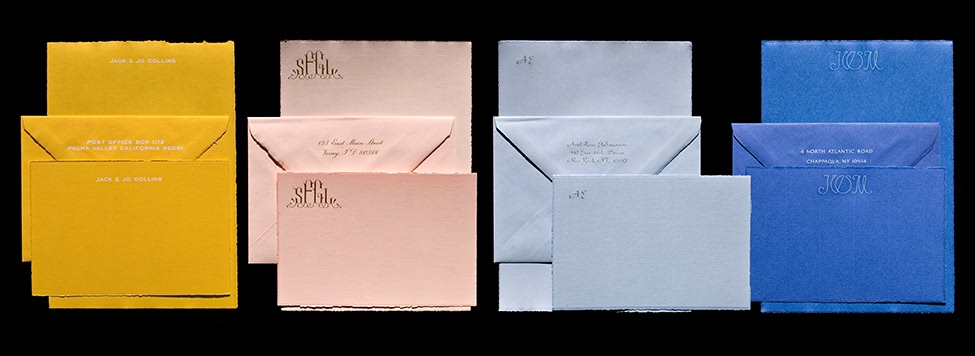
In 2022, Collins began donating the research collected for her book, The Complete Engraver, and her stationery business to The Historic New Orleans Collection. She also donated the Nancy Sharon Collins, Stationer LLC archive of engraved stationery the company has created since 1997.In 2007, Mrs. Collins met Don Smith, a retired ad man in the manner of the TV series, Mad Men. Think 1960s advertising world with martini lunches, expense accounts, and dames. Yes, Don’s memories were vivid. And real. Photo documentation of his work and others had been preserved. In two plastic, 35mm slide carousels and loads of memories, that world came to life. Mrs. Collins raised money to digitize the slide show and animate it. You can view it HERE.
2008. With this bit of local cultural history, Collins was intrigued. What ensued was 17 years of taking oral histories, transcriptions, indexing, and ultimately the donation of the oral histories of Gulf Coast graphic arts practitioners to The T. Harry Williams Center for Oral History at Louisiana State University. A teaser for what became the History of Graphic Design in South Louisiana Project is HERE. All sixteen oral histories are housed at the Center itself.
Links to the finding aids for all three collections (eight and five linear feet, respectively) are HERE and HERE and HERE.
Finally, Mrs. Collins has donated the research material and scripts from Letters Read spanning ten years and comprising one linear foot. Letters Read is the ongoing series of readings from archives and special collections focusing on gender and civil rights. It is a passion project of Collins’s.